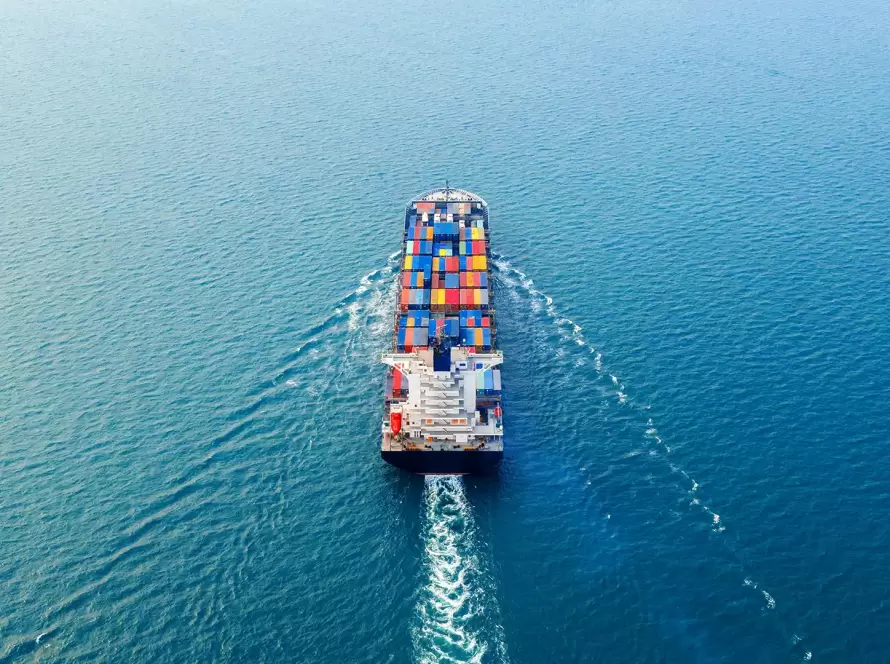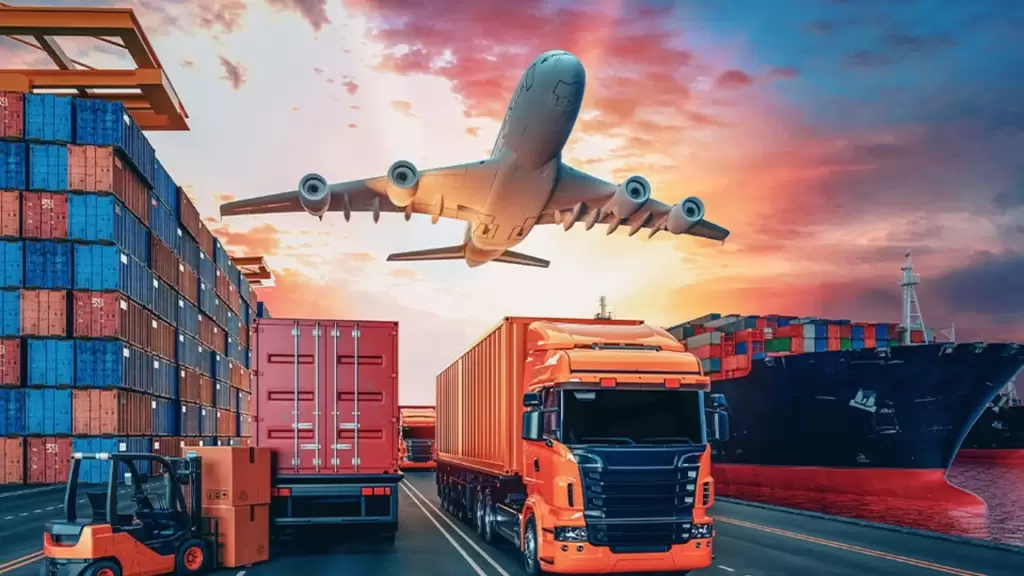
The exchange of goods and services between countries connects nations and consumers by improving accessibility and offering a broader range of product options.
Generally, freight forwarding services simplify supply chain management by providing consolidation, storage, distribution, handling and packaging options to individual consumers and business entities. In terms of services offered, freight forwarders coordinate with customs to ensure proper documentation, and find the most timely, cost-effective routes available.
Market Size and Growth
The growth of international trade volume, as well as a rising demand in purchasing less expensive products, is playing a key role in the expansion of the freight forwarding market. The global freight market was valued at USD 220 billion in 2024 and is expected to grow in a compound annual growth rate (CAGR) of 4.6% by 2030 (Straits Research, 2024).
The ocean freight segment market ranks highest against air, road and rail forwarding. This could be due to its capacity to accommodate larger volumes with less costs, in comparison to the latter.
Overcoming Challenges
Impact of Maritime Chokepoints
Following a period of relative stability in 2023, the current year shows mixed performance of the container shipping market especially amongst different trade routes. This impact undoubtedly influenced freight rates especially considering the disruptions experienced in the Red Sea, the Suez Canal and the Panama Canal.
The Indian Ocean is strategically significant and is a crucial maritime route for energy imports and countries in this area is known to have important trade ties with China, France, Qatar and UAE, to name a few. It also has three critical energy trade chokepoints and a backup route in case of disruptions; the Mozambique Channel. While external factors such as climate change contributed to these fluctuating rates, such as the El Niño-driven drought forcing carriers to reroute, disruptions in the Red Sea has nonetheless increased freight costs, and hindered shipments across the region (UNCTAD, 2024).
Ship carriers across Asia-Europe and Asia-Atlantic had diverted their trade routes to the Cape of Good Hope in lieu of this, and major players in the shipping industry has had to suspend transits through the Suez Canal. This in turn led to the congestion of South African ports and East African Ports.
Cargo Shortage and Congestion in Key Asian Hubs
China and Southeast Asian faced several complications due to acute shortages in containers, and escalating port congestions experienced globally due to geopolitcal disruptions.
Key Asian ports such as in Jebel Ali and congestion in the port of Singapore is a culmination of the above events, whereby berthing delays were recorded upto 7 days.
As Analyst Linerlytica reported “The global port congestion indicator hit the 2m teu mark, accounting for 6.8% of the global fleet with Singapore becoming the new congestion hotspot”.
In response to this, the government of Singapore reactivated old berths and accelerated the development of it’s new port, the Tuas Port (Seatrade Maritime News, 2024).
Small Island Developing States and Least Developed Countries could face the brunt of these unpredictable developments, with global consumer prices forecasted to rise, as maritime transport costs continue to rise. As reported by United Nations Conference on Trade and Development, minimizing these risks are not impossible. According to UNCTAD, investing properly in ports infrastructure and transport infrastructure could possibly minimize increasing costs.
The Maldivian Economy
The government’s initiative to encourage small businesses and individual consumers has underscored the importance of implementing a Free Trade Agreement (FTA) between the Maldives and China, carrying forward a strategy that was to be adopted from a previous administration.
This step would not only reduce reliance on USD for transactions made, but would enable direct investments, simplify travel for locals, and improve accessibility to high-quality goods and services from oversees.
In constrast, a report published by Baani Centre for International Policy sparks concerns over the potential loss of revenue from taxes, due to this implementation of the agreement and the extent to which customers will truly benefits from the reduction. The question of whether proper monitoring can take place and whether these reduced costs will be absorbed into corporate profits is highlighted specifically in the report.
The Q3 as per the National Bureau of Statistics in Maldives report highlightes that, the Transport and Communications sector accounts for 1.3% of RGDP and the GVA shows a growth of 10.3%.
Future Forecasts
While 2024 had provided unprecedented challenges for the shipping and logistics sector globally,, it also offers promising opportunities for growth nationally, through potential infrastructure developments to mitigate risks and strategic agreements to facilitate a more resilient global supply chain.
It is important for stakeholders to remain agile in such complex landscapes and remain forward-thinking and resilient, to remain adaptable in these evolving times.
References
Seatrade Maritime News
UNCTAD
https://unctad.org/system/files/official-document/rmt2024ch3_en.pdf
WeFreight
https://wefreight.com/ports-congestion-across-china
PO – FTA
https://presidency.gov.mv/Press/Article/31612
National Burea of Statistics
https://statisticsmaldives.gov.mv/mbs/wp-content/uploads/2024/12/QNA2024Q3.pdf
BAANI Report
https://baanicentre.org/wp-content/uploads/2023/09/Baani-FTA-Report-Final.pdf