Photo Credits: Alamy
Growing attacks in the Red Sea are forcing major shipping companies to rethink their operations.
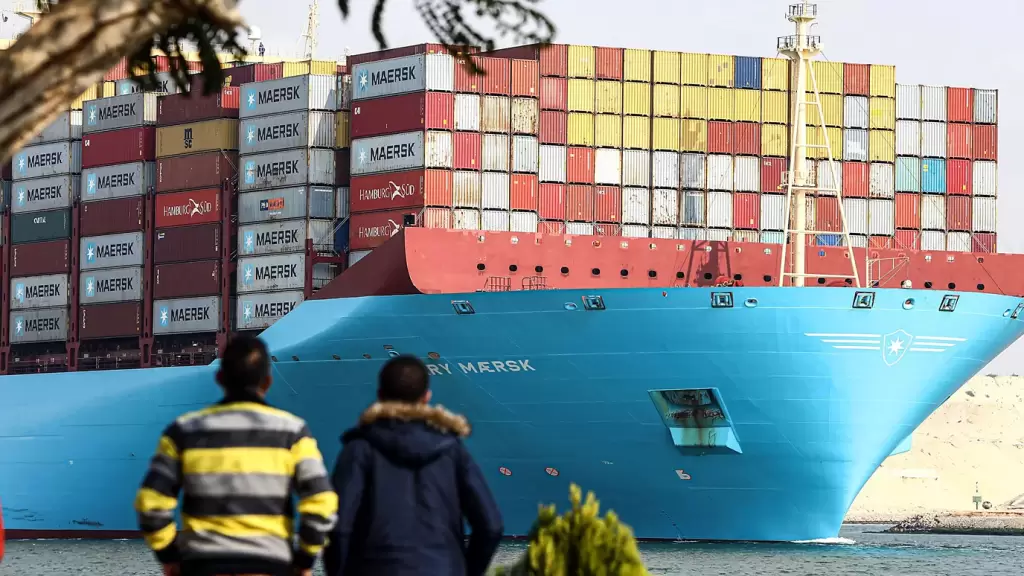
Companies such as ZIM, Hapag-Lloyd, and Maersk are experiencing delays in supply chains and delivery services. As a consequence of this, major businesses are forced to reroute from the Suez Canal. Major delays, higher expenses, and a concentration of vessels close to the crucial waterway are some of the logistical issues faced by shippers, in response to this shift.
Roughly 12% of global trade, valued at over $1 trillion (£790 billion), flows across the Red Sea annually. However, a lot of shipping companies have started to steer clear of the region. On their way from Asia to Europe, hundreds of enormous container ships—some of which are longer than 300 meters (984 feet)—are now opting to take a long detour around the African continent rather than sailing up the Red Sea and through the Suez Canal. Rerouting such massive ships, however, is not a simple task—the logistics involved can be quite time-consuming and massive.
Avoiding the Red Sea and making the long detour around the Cape of Good Hope lengthens the sailing time for each trip by around 10,-12 days and 3,500 nautical miles (6,500 km). This calls for additional fuel—some estimates put it at $1 million or £790,000—possibly the discovery of alternate ports of call, changes to delivery schedules, and an increase in expenses.
The Cape of Good Hope, located at the southern end of South Africa, is known for its challenging weather conditions. According to information given to the International Union of Marine Insurance conference in Berlin, a total of 221 boxes were lost in 2023—a record low since records began in 2008, during which losses averaged about 1,500 boxes. However this number is expected to rise as a lot of businesses are opting to go via this route currently, to avoid additional risks.
Major carriers have imposed war risk premiums, which range from $20 to $100 per container, in an effort to offset the higher risks involved in shipping in some areas. The choice to divert ships around the African continent and the resulting increased financial load have led to transit durations that are now 7–14 days longer. At the same time, supply chain methods are being reevaluated as a result of carriers’ struggles with increased costs, fees, and delayed delivery.
The consequences of this heightening crisis are looking dire and it looks like the routes and delivery times for multiple shippers will change, and perhaps not for the better.