China’s Maritime Dominance
Ocean shipping is a crucial component of global trade, responsible for transporting nearly 80% of goods worldwide. It can be said that it does in fact, form the backbone of the supply chain for most countries. The volume of cargo transported by ships more than doubled from the period of 1990 to 2021, from four to nearly 11 billion tons.
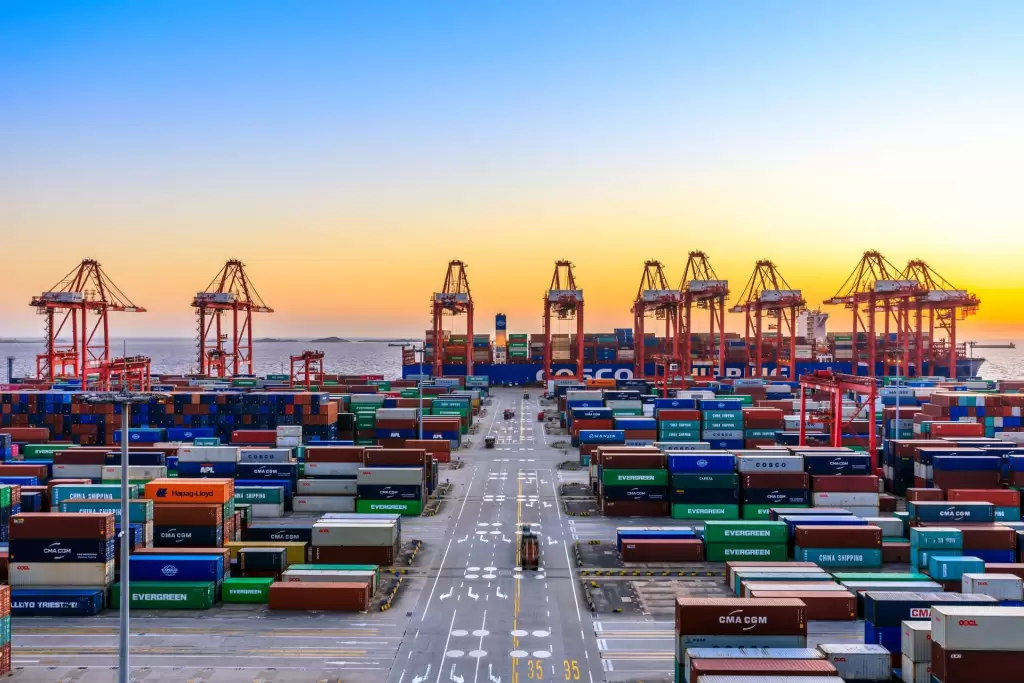
As of 2024, eight out of the world’s ten busiest container ports remained in Asia, highlighting the region’s dominance in maritime trade. Shanghai led the rankings with a capacity of over 49 million TEUs followed by Singapore and Hong Kong.
China continued to exert significant influence over the maritime industry with its Chinese shipowners and shipbuilders playing a major role through substantial investments across various vessel sectors. Last year alone, China Merchants Shipping led with orders for 28 vessels worth $4.4 billion while COSCO Shipping Lines followed, investing $3.6 billion in 18 New Panamx container ships (13,400-14,000 TEU). COSCO Shipping Development secured third place, committing $929 million order for 20 bulk carriers, inc; including Ultramax and Kamasarmax vessels.
Over the past decade alone, the global container ship fleet has expanded considerably. The number of container ships in the global fleet showed a significant rise from 4,966 ships in 2011 to 5,589 ships by 2022. This steady increase reflects the ongoing demand for maritime transport and the industry
Trade Policy and Strategic Moves
China’s dominance in shipping extends beyond vessel investments. It plays a key role in shaping global trade policies.
On Tuesday, in response to 10% of tariffs on all goods from the U.S, China implemented limited tariffs on the U.S. imports, putting several companies including Google, of potential sanctions in a measured response to the broad duties on Chinese imports imposed by President Trump.
China is also set to impose export controls coming Monday, on critical metals such as tungsten used in electronics, military equipment and solar panels. This however, gives some time for both Washington and Beijing to pursue a potential agreement, which Chinese policymakers have expressed hope to reach. This strategic move could impact global supply chains and shift trade dynamics amongst their key partners.
What This Means for Maldives
The evolving trade landscape presents both opportunities and challenges for countries like the Maldives, in light of the newly established China-Maldives Free Trade Agreement which took effect on January 1, 2025. The FTA promises to eliminate tariffs on a wide range of exports between the two nations including ships, electrical equipment and agricultural products. Notably, Maldivian aquatic exports to China, such as tuna will also benefit from zero tariffs offering a significant boost to the local economy. The Maldives’aquatic exports to China will also benefit from zero tariffs.
However, China’s imposition of export controls on certain materials which could disrupt global supply chains may create new opportunities for the Maldives. With preferential access to the Chinese market under the FTA the Maldives cis uniquely positioned to leverage shifiting trade dynamics. The country could expand its exports particularly in sectors where it has a competitive advantage as well as navigate broader trade relations
In this context, the Maldives-China free trade agreement offers more than just tariff reductions. It serves as a strategic framework for enhancing bilaterial economic relations and facilitating the exchange of goods between two nations. Additionally, the FTA could pave way for increased Chinese investment in key Maldivian sectors such as tourism, infrastrcuture and renewal energy which are pivotal t o the Maldives’ long-term econoomic growth. The agreement also provdes added security for Maldivian businsees investing in China, encouraging further cross-border collaboration and fostering a robust economic partnership.
China’s expanding influence over global maritime trade and its strategic trade policies continue to reshape the dynamics of international commerce.